We're not ready for the smart glasses
Intelligent eyewear used to be recognizable. Not anymore.
In May 2012, I was huddled around my 12.1-inch Samsung Chromebook in my college dorm room in Santa Cruz, California. And I had just witnessed the coolest tech demo I had ever seen, and probably will ever see.
Hundreds of feet above the Moscone Center in San Francisco, a man in a wingsuit jumped out of a blimp, parachuted to the roof, did a few flips on a bicycle, and descended to the street. He ran inside to greet Google's then-CEO Larry Page and a room of Google I/O attendees, all while streaming his point of view live on (one of the many iterations of) Google Hangouts. From a pair of glasses. Or, I geuss you could call them a pair of frames.
Google Glass was a transformative moment. We were just a few years into the smartphone and app revolution that had completely upended how we communicate, and Google was already trying to find the next computing paradigm. Glass wasn't quite VR, which encased you in a wholly separate world for isolated experiences. It was ambient computing, a way to keep your phone in your pocket while retaining the smartphone's benefits: turn-by-turn navigation, POV video, and messaging, all without leaving the real world.
If you're reading this, you probably already know how the story ended. Google Glass never truly made it to the mainstream. While a limited run of $1,500 Explorer Edition models were sold to early adopters, the project was cut short within a couple of years. 'Explorers' were getting thrown out of movie theaters, pulled over by highway patrol officers, and labeled as 'glassholes' by the general public.
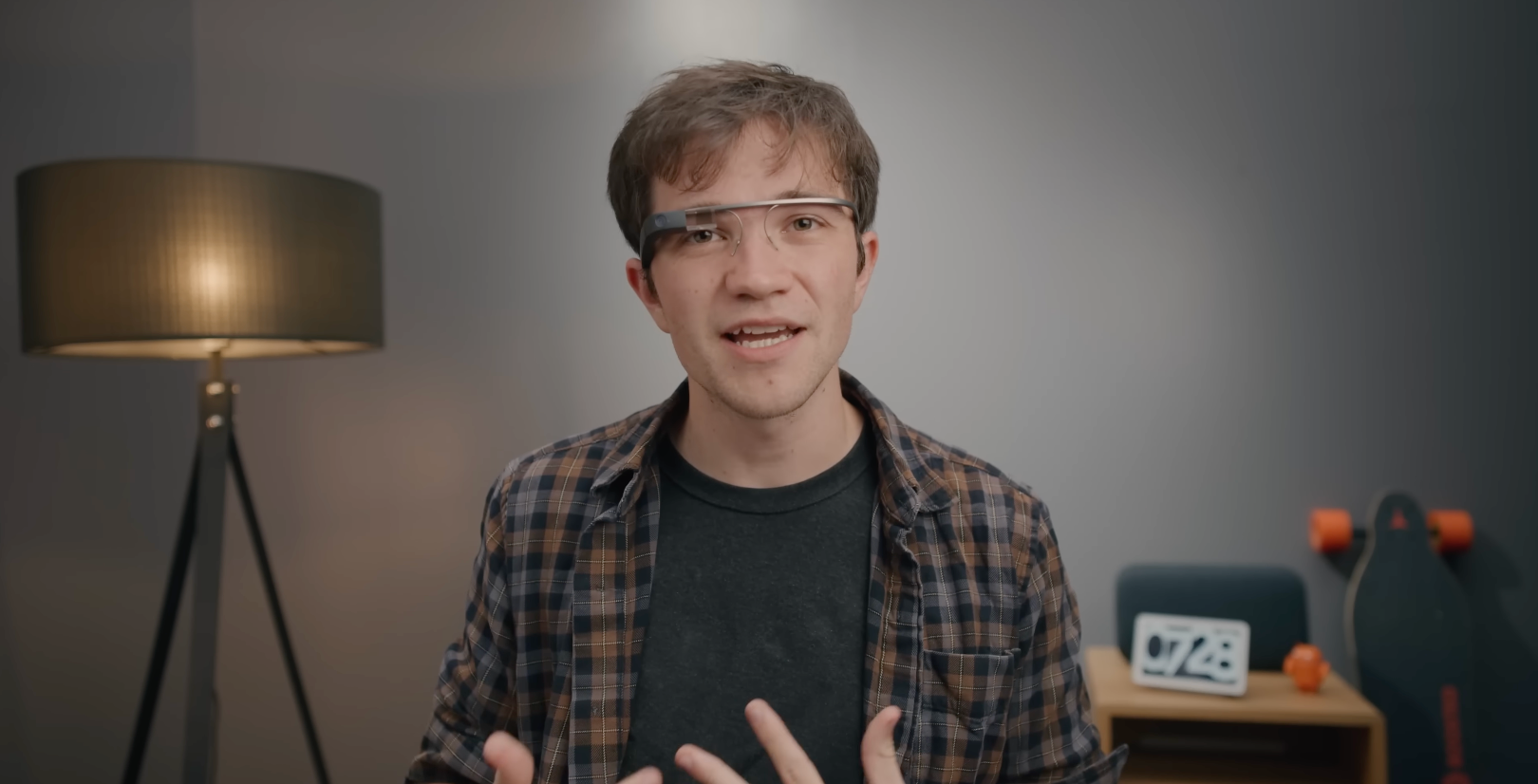
Google Glass made people uneasy. It didn't help that it didn’t quite look like regular eyewear, with only a metallic wireframe holding a small projector and a prism - begging the question of what the hell you were wearing. But once people saw the camera, they felt an immense discomfort knowing they could be recorded without any knowledge it was happening.
Ironically, the strange design of Google Glass may have been the thing that made it socially survivable, for a time. Its unabashedly prototype-looking design made it instantly recognizable. People didn't really know what they were looking at, but at least they knew they were looking at a computer.
This isn't the case in 2026.
Today's smart glasses, and by that I almost exclusively mean Meta Ray Bans, look shockingly similar to any other pair of Ray Bans you might casually see on the street. The only real indicator that they're anything else is a slightly thicker-than-average frame and a camera the corner. If you didn't know to look out for them, they would pass as a regular pair of spectacles.
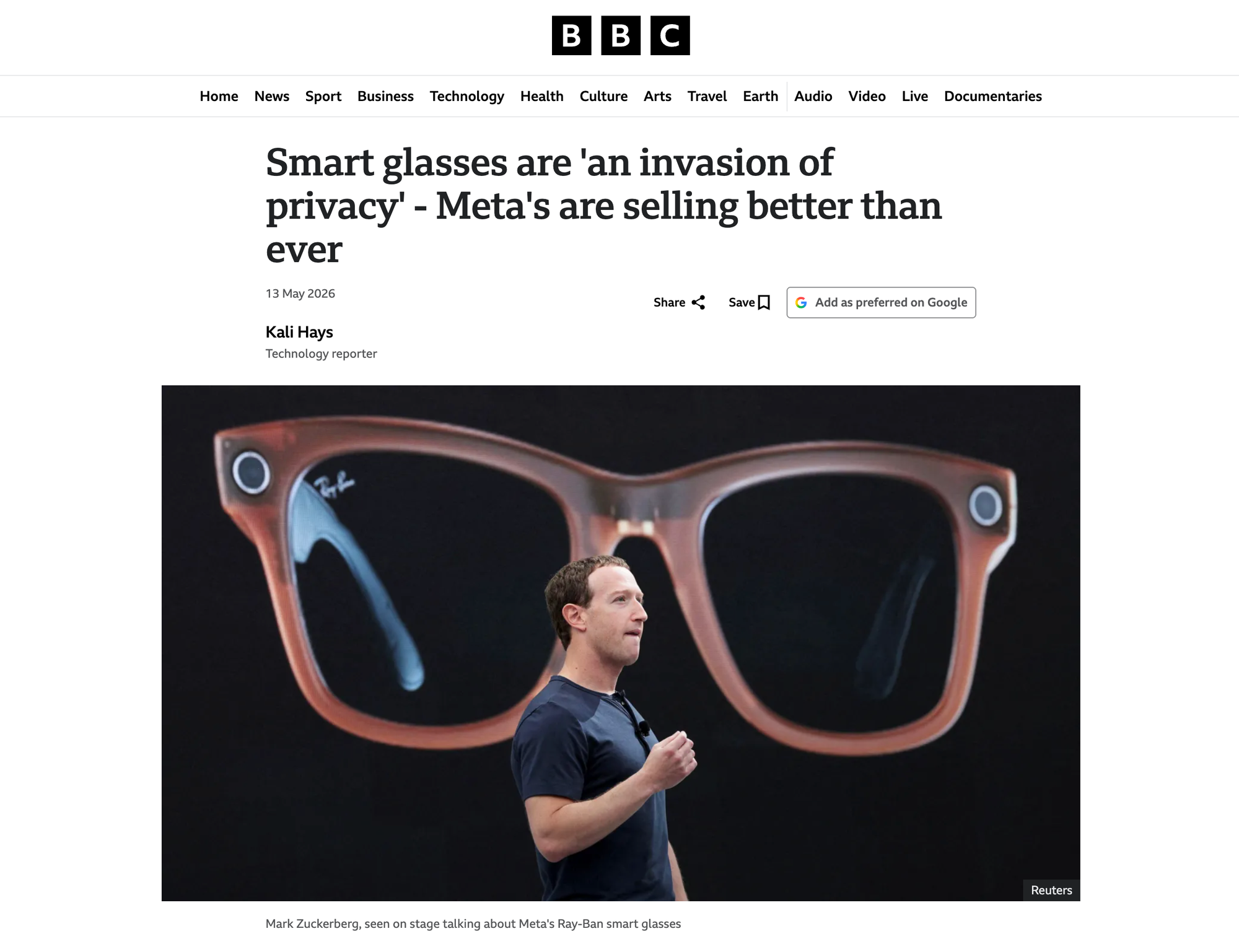
But people have learned to look out for them. In the past couple of years, social media feeds have become flooded with point-of-view videos of creators discreetly filming strangers with the glasses, looking for viral moments. From fake dating scenarios to public freakouts, these videos put you in the moment and rack up millions of views and comments.
As people have spent more time with their face glued to their phones, so has the demand for more content to be produced. Point-of-view video is the perfect product to intersect with social media's insatiable desire for outrage, novelty, and, above all, attention. It strips the context from real-world experiences, letting the audience judge who was in the right or wrong in any interaction imaginable.
"At least the glasses are recognizable," you could tell yourself. Not anymore.
Last year at Google I/O, Google announced a new smart glasses ecosystem powered by Android XR, along with partnerships with brands like Gentle Monster and Warby Parker. I tried a prototype at the event, and despite the hardware inside, they looked practically indistinguishable from standard eyewear. This year, Google showed off what the first commercial units actually look like. And shocker, they look even more normal, nearly mirroring the glasses the companies already sell.
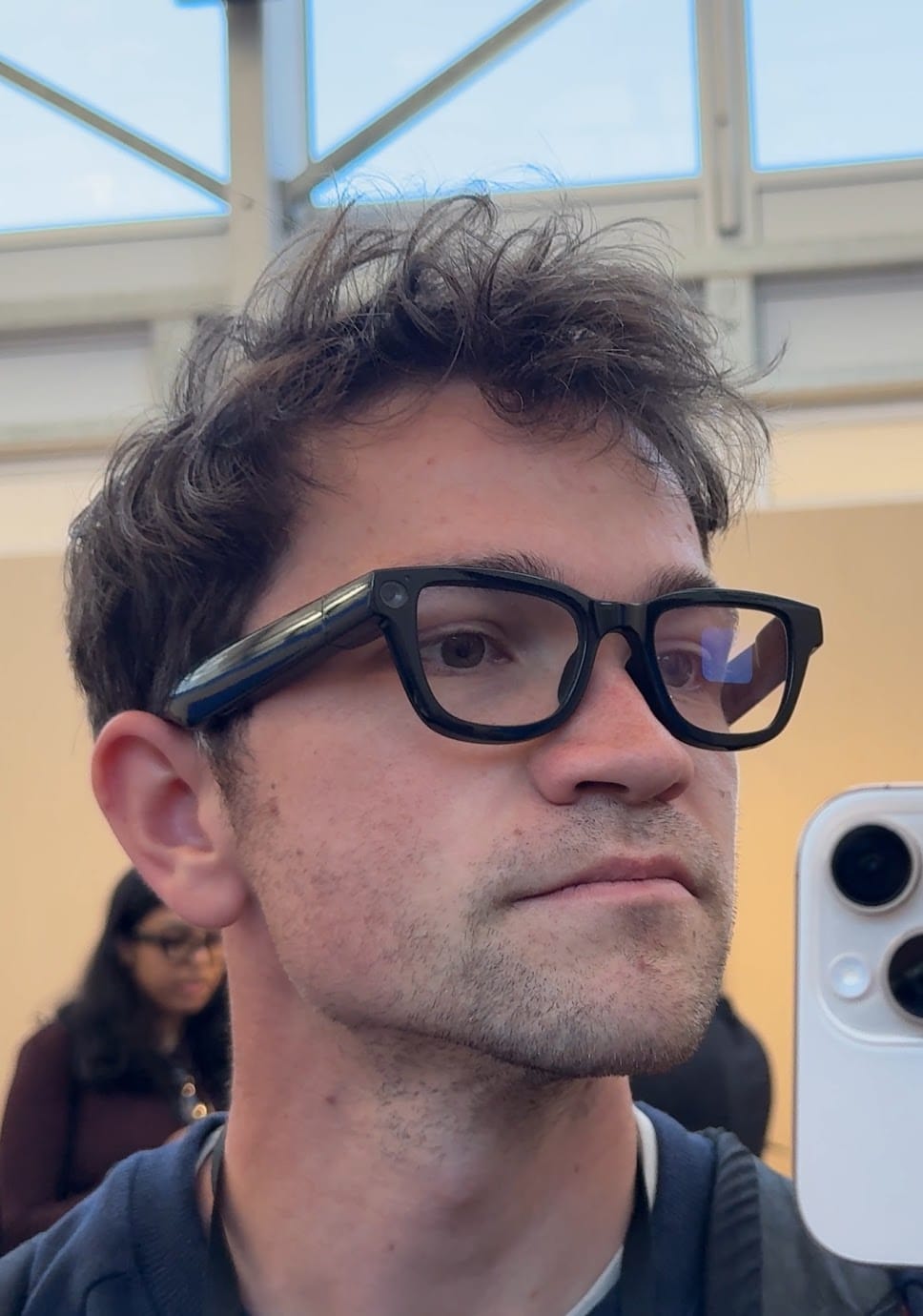
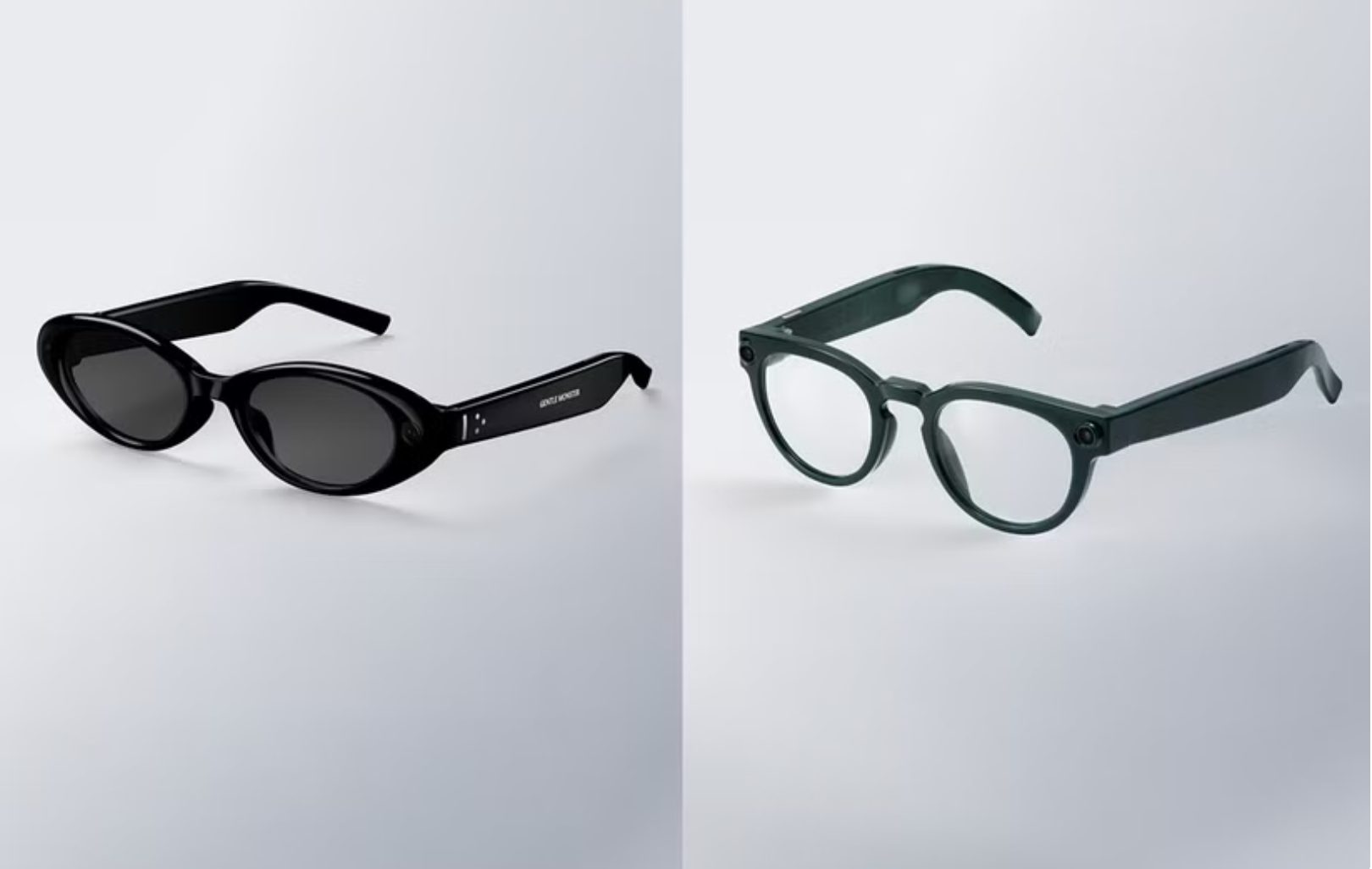
Me wearing Google's prototypes (left) vs final product (right)
What I'm not sure people fully grasp yet, is the fact that smart glasses are about to arrive in every shape, style, and size imaginable. If you see it on the street today, it could be smart glasses tomorrow.
Meta gave the public a few years to learn that specific visual vocabulary. But Android XR is an open platform, not a singular product. Just like Google used Android partnerships with HTC, Samsung, and LG to commoditize the smartphone, it is about to do the same for intelligent eyewear.
When smart glasses come in every design imaginable, from the fashion-forward designs of Gentle Monster to the elevated everyday look of Warby Parker, that visual vocabulary of what you know smart glasses to be shatters. By 2027, it will likely be impossible to differentiate intelligent eyewear from normal glasses.
The frustrating thing, to me, is that the promise of this technology is just as exciting, if not more so, as it was 14 years ago. The intelligent eyewear demo was easily the most compelling thing at I/O this year, mostly because it showcased things normal people actually find useful. You can casually ask for directions to “that coffee shop I visited with Sarah last week”, and it will guide you there. In the demo, Gemini even autonomously placed an order for a cold brew along the way. I still find the promise of ambient computing very exciting. The less I have to look at my phone while I'm outside, the better.
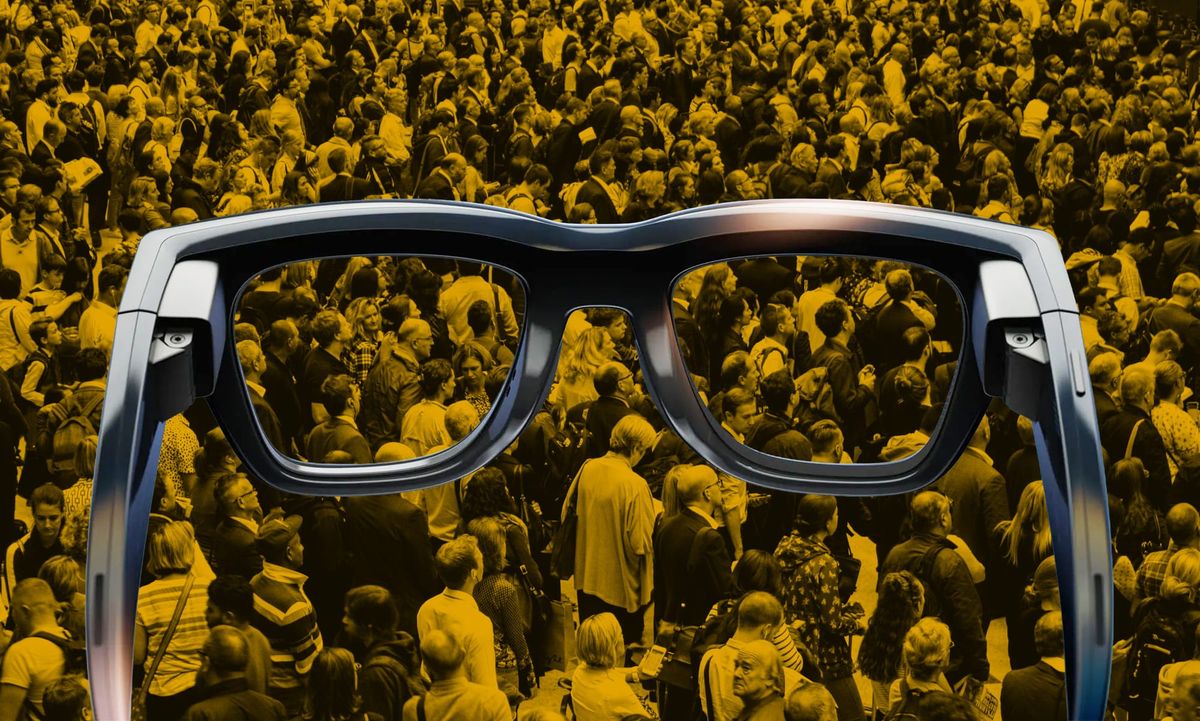
But the anxiety of cameras everywhere, at all times, is worse than ever in 2026. If we thought the smart glasses recording issue was bad now, it's about to get a lot worse. It's critical that companies think about the social implications of this, and it would be ideal if they were willing to implement some form of protection to stop this kind of content from being made. But of course, that almost certainly won't happen, as most of these companies are jumping at the opportunity to gather more real-world training data.
Every transformative leap forward in computing threatens to break the existing social order. But smart glasses feel uniquely capable of changing something much more subtle: the basic social understanding of when we are simply being seen, and when we are being recorded. I hope people can tell the difference.